The Kaas Plateau also known as the "Kaas Pathar" is a plateau situated in the Western Ghat Sahyadri range, 22 kilometers from Satara city in Maharashtra state of India and is known for various types of wild flowers which bloom during August-September every year. The area of plateau is located at a height of 1200 mt and is approximately 1,000 hectare.[2] The name Kaas originates from Kaasa tree (Elaeocarpus glandulosus). It has been declared as Biodiversity World Heritage Site by The United Nations Educational Scientific and Cultural Organization (Unesco).[3][4] The place has more than 850 different species of flowers and other plants including OrchidsKarvy and carnivorous plants such as Drosera Indica. This falls under the Sahyadri Sub Cluster ofWestern Ghats which is now a UNESCO World Heritage Site.

About

Kaas plateau is a plateau located near Satara. It is situated high hill plateaus and grasslands turns into a 'valley of flowers' during monsoon season, in the month of August. Kaas Plateau has more than 150 or more types of flowers, shrubs and grasses. The orchids bloom here for a period of 3–4 weeks during this season. Kaas plateau a World Natural Heritage site.

Formation of plateau

Plateaus can be formed by a number of processes, including upwelling of volcanic magma, extrusion of lava, and erosion by water and glaciers. Magma rises from themantle causing the ground to swell upward, in this way large, flat areas of rock are uplifted. Plateaus can also be built up by lava spreading outward from cracks and weak areas in the crust. Plateaus can also be formed by the erosional processes of glaciers on mountain ranges, leaving them sitting between the mountain ranges. Water can also erode mountains and other landforms down into plateaus. Computer modeling studies suggest that high plateaus may also be partially a result from the feedback between tectonic deformation and dry climatic conditions created at the lee side of growing orogens.[7] To control possible damage by common tourist, Government Departments have restricted the number of visitors to 2,000 per day.[1]

Geography

Kaas plateau is a plateau located around 25 km fromSatara. There are two ways to reach Kaas. one the more direct way from Satara and another from Tapola via the link road connecting Mahabaleshwar and Panchgani to Kas Pathar. The link road facilitates tourists in staying in Tapola or Mahabaleshwar after visiting Kas Pathar rather than the Satara town or cutting the weekend picnic short and making it a one-day weekend picnic. Kas plateau is 20 km away from Northern part of Koyana Sanctuary. The major portion of the plateau is reserve Forest. Kaas lake (built 100 years ago) is a perennial source of Water supply for western part of Satara city by gravity. The flora of Kaas are around the locality of that area. The plateau is largely formed of basalt which is directly exposed to atmosphere. The basalt rock is covered by a thin cover of soil formed due to erosion and has accumulated a layer of not more than an inch or so. This soil is neither black nor lateritic. At certain places water gets accumulated because of uneven surface. The plants growing on Kas plateau are typically of herbaceous nature of like grasses. The small shrubs and trees are located at the periphery of the plateau at Kaas plateau.[8]
The various distances of Kas plateau are as follows:
  • From Satara - 25 km
  • From Pune - 125 km
  • From Mumbai - 280 km
  • From Kolhapur - 150 km

Bio-diversity on Kaas plateau

Kaas Plateau is rich in its Bio-diversity. Many species are observed on plateau which are new to the Botanical Science. Many of the endemic, endangered plants are found on Plateau. More than 850 species of flowering plants are reported on the plateau. 624 species have entered in the Red Data Book. Out of these 624 species, 39 are found only in Kaas Region.


Chhatrapati Shivaji Raje (also Chhatrapati Shivaji Maharaj, Shivaji Raje Bhosale) was the Founder of Maratha Empire in India. He was born in 1627 A.D. (or 1630A.D.) at Shivneri, a hill fort near Puna. His father Shahaji Raje Bhosale was employed as an officer in the army of the Sultan of  Bijapur . Shivaji was brought up under the care of his mother Jijabai and guardian Dadoji Kondadev.Shivaji’s mother Jijabai and his guru Ramdas inspired him with the noble and patriotic ideas and infused in him love for the religion and the motherland. Shivaji got military training and learnt the art of government from Kondadev. He organized a number of Marathi hill-folk into a fighting force and began to raid neighboring territories.
Shivaji started his conquests: Chhatrapati Shivaji began his early career of conquests at the age of nineteen by capturing the fort of Torna, about twenty miles from Puna. After this he conquered other forts like Chakan, Singhagarh and Purandar, situated within the territories of the Sultanate of Bijapur. In order to put pressure on Shivaji the Sultan of Bijapur imprisoned Shahaji Raje Bhosale, Shivaji’s father. After that Shivaji kept quiet for a few years. Shahaji Raje Bhosale was released by the Sultan. But Shivaji again started his activities of conquest. By 1655 Shivaji had occupied the northern part of Konkon and the fort of Javali.
These acquisitions provoked the Sultan of Bijapur who sent against Shivaji in 1659 a large army under a senior general named Afzal Khan, with instructions to bring Shivaji to the court dead or alive. Afzal Khan tried to kill Shivaji by treachery. But Shivaji outwitted him and killed Afjal Khan.The army of Shivaji defeated the Bijapuri Sultanate in the Battle of Pratapgarh. Huge quantity of weapons and war-materials were collected, which further strengthened the Maratha army.
The Sultan of Bijapur again sent a large army, under the leadership of Rustam Zaman, which also failed to curb the power of Shivaji. The battle took place on December 28, 1659. The Maratha army of Shivaji defeated the Bijapuri army in the Battle of Kolhapur.
Shivaji and the Mughals: Emboldened by his success Chhatrapati Shivaji began raiding Mughal territories in 1657. Aurangzeb felt the necessity of chastising him and sent a big army under Shaista Khan. He occupied Puna and encamped there. One night Shivaji made a surprise attack on Puna. A large number of Mughal soldiers were killed and Shaista Khan had a narrow escape. After this incident in 1664, Shivaji sacked Surat and carried off a huge booty.
Treaty of Purandar: Aurangzeb then sent Raja Jai Singh of Amber and Dilir Khan to subdue Shivaji. Jai Singh captured a number of forts held by Shivaji and compelled Shivaji to conclude the treaty of Purandar (1665 A.D.). By the terms of the treaty Shivaji had to cede 23 forts to the Mughals, acknowledge the supremacy of the Mughal emperor and agreed to assist the Mughals in their fight against Bijapur. Jai Singh also persuaded Shivaji to pay a visit to the imperial court at Agra.
Escape of Shivaji: Aurangzeb did not treat him well and kept Shivaji and his son Sambhaji,  imprisoned under careful watch. But Shivaji managed to escape from Agra with his son. Reaching home he started war against the Mughals with renewed vigor. At last Aurangzeb was obliged to recognize him as a Raja (king). In 1674 Shivaji declared himself an independent ruler of Maharashtra and amid great pomp and grandeur celebrated his Rajyabhishek.He assumed the title of Chhatrapati. Then he conquered Jinji, Vellore and a large part of Tanjore. Shivaji died in 1680 A.D.
Estimate of Shivaji: Shivaji was a born leader and a great administrator. His charisma drew people around him. In him they found the leader who never hesitated to risk his own life in times of danger. Shivaji had a constructive genius of a high order. The army of Shivaji was well organized. The most significant achievement of Shivaji was the welding of the Marathas into a nation. He infused a new spirit of unity and dignity into the Maratha people consisting of 96 clans.
In recruitment to services Shivaji showed no partiality to any community. There was no discrimination, no casteism, and no communalism. He, however, laid emphasis on the recruitment of the son of the soil. Though a champion of Hinduism, he extended his liberality to the people professing other religions.
Art and Culture: Shivaji was a patron of art and culture, piety and letters. Prominent among the saintly persons whom Shivaji admired were Ramdas, Tukaram, Baba Yakub, Mauni Baba, etc. Sanskrit poets like Jairam, Paramananda, Gaga Bhatt, and some Hindi poets received his patronage.
Administrative system of Shivaji: The administrative system of Shivaji was largely borrowed from the administrative practices of the Deccan states. It was also influenced by the principles laid down in Kautilya’s Arthasastra and the Dharmasastras. In the discharge of his duties he was assisted by a council of ministers.
Provincial administration: Shivaji divided the territory under his direct rule (which he called the Swaraj territory) into a number of provinces. The ancient institution of the Panchyat was preserved in the rural areas. The head of the village, administered the village with the help of the panchyat.
Revenue system: Shivaji laid down an excellent revenue system based on the principles adopted by Todar Mal and Malik Ambar. His officers  made an elaborate survey of the land and fixed the rent at 33 per cent of the gross produce. Shivaji afterwards demanded a consolidated rent of 40 per cent. It is however, wrong to assume that Shivaji abolished the jagirdari system.
Chauth and Sardeshmukhi: Chauth and Sardeshmukhi were also the main sources of income of the state. They were levied on the territories which were not under the direct control of Shivaji. The inhabitants of these areas paid the Chauth or one fourth of the standard revenue as protection money against the plundering raids of Shivaji. The territories and principalities which paid chauth were also required to pay an additional tax called Sardeshmukhi. This was one tenth of the revenue of those areas. Those who paid Sardeshmukhi received Marathi protection against other invaders. Both the taxes together made a sizeable income for the Maratha kings.

Military system: 
Shivaji created and maintained an organized and disciplined army consisting of infantry, cavalry and navy. Shivaji recruited only able persons in his army. He had the skills to manage a huge army. His army mostly composed of light infantry and light cavalry was admirably well-adapted to guerilla warfare and hill campaign. The army movements were extremely quick.
Forts played an important role in Shivaji’s military system. Every fort was kept under three officers of equal status. They acted together but served as a check on one another.
Shivaji recognized the necessity of a strong navy. He had a navy of about 200 warships. The creation of a navy shows the foresight of Shivaji. A number of coastal fortresses kept guard over the sea. The Portuguese, the British, the Siddis and the Mughals were thus effectively kept in check.
Nor were Shivaji’s intelligence service neglected. The espionage system formed a well-paid and efficient wing of the Maratha army.
Death of Shivaji: Chhatrapati Shivaji Maharaj died on April 3, 1680. But the Marathas continued their struggle against the Mughals under his successors.

The Most Important Vishnu Temples In India

The Most Important Vishnu Temples In India
Lord Vishnu is one of the most important Hindu Gods to many devotees across the world. He is a part of the Trimurti of Hindu Gods along with Shiva and Brahma. While Brahma is known as the Creator and Shiva as the Destroyer; Vishnu is the Preserver of our Universe.
There are several thousand temples dedicated to Lord Vishnu around the world; either big or small. Most of the key significant temples are located in India. Each year these temples attract millions of pilgrims from across the globe who come to seek the blessings of Lord Vishnu.

Let Us Look At Some Of The Most Important Vishnu Temples In India –


1. Jagannath A special temple dedicated to the Jagannath form of Lord Vishnu; this temple is also one of the ‘Char Dhams’ of Vaishnavism. The temple has a lot of great legends associated with it and has stunning architecture too. The Ratha Yatra festival is the most important celebration at the Jagannnath Temple.
1

2. Ranganathaswamy – This temple at Srirangam is one of the most important ‘ Swayam Bhakta Kshetras’ dedicated to Lord Vishnu. It is the largest functioning Hindu temple in the world and it has brilliant architecture.According to some legends, Lord Rama who was a manifestation of Lord Vishnu himself, worshipped the deity here after returning from Lanka. 

3. Venkateshwara – This is probably the most famous Vishnu temple in India and also one of the oldest. Also known as the Venkateshwara Temple, this legendary temple is located in the hill town of Tirumala near Tirupati. Every year innumerable number of devotees visit this temple to seek the powerful blessings of Venkateshwara Vishnu. 
Image result for venkateswara temple in tirupati images

4. Vitthalrukmini – This special temple situated at Pandharpur is one of the most important Vaishnav temples in India. It is the most visited temple in Maharashtra and is dedicated to the Vithoba form of Lord Vishnu and his consort Rukmini. There are several legends associated with Vithoba, who is widely revered by many Hindus. 

5. Dwarkadhish – This is another significant temple which is dedicated to the Krishna form of Lord Vishnu. It is at least 2000 years old and is rumored to have been built by Lord Krishna’s grandson Vajranabha. It is quite important as it is situated at Dwarka, which was the residence of Lord Krishna Himself. It also holds the distinction of being one of the ‘Char Dhams’ and also a Divya Desam site. 

6. Bankey Bihari – This is another Krishna temple situated in the holy city of Vrindavan and is one of the key sites of Vaishnavism. The famous deity at this temple is in the Tribhanga pose and it is also believed that the idol is the most accurate representation of Lord Krishna. The festivals of Janmasthami Jhulan Yatra and Akshaya Tritiya are celebrated in a grand manner here.

7. Simhachalam – Simhachalam Temple near Vishakapatnam is another renowned temple dedicated to the Narsimha Avatar of Lord Vishnu. It is one of the eighteen Narsimha Kshetras in India and there are many ancient legends dedicated to this temple. 
7

8. Kanak Bhavan – The Ram Mandir or Kanak Bhawan at Ayodhya is dedicated to Vishun’s Avatar Rama and his consort Sita. This temple has great ambience and Kirtans are sung here throughout the day. The festival of Rama Navami is the most significant celebration at this temple, and it draws a huge number of devotees during this time. 

9. Radha Raman Mandir – Radha Raman Mandir at Vrindavan is another site dedicated to Lord Krishna and his consort Radha. Built about 500 years ago by Gopala Bhatta Gosvami, this temple houses the Shaligram murti of Lord Krishna. It commemorates the undying universal love of Radha and Krishna and Radha Saptami is the most important festival celebrated here. 
9

10. Srinathji – Perhaps the only major temple where Sri Krishna is worshipped in his child form. The idol here existed before the temple was built at Nathdwara, which means ‘the doorway to God’. Thousands of devotees visit this temple each year, just to get a glimpse of the famous image of Srinathji, who is a manifestation of Lord Krishna. 
Image result for nathdwara temple images
-

Top forts in Maharashtra

Top forts in Maharashtra


When people think of Maharashtra they only think about Mumbai being the financial capital of the nation that draws more income, but there is more that Maharashtra has to offer than just fast life and hustle bustle of Mumbai. Maharashtra has a rich history and culture that still remains unexplored and this monsoon season I have decided to take my readers on that epic journey back into the world of forts and battles where life was unforgiving, challenging and where brave Maratha warriors fought for the establishment of Hindavi Swaraj (complete freedom of India). Let’s go back to those treacherous mountains and unexplored locations to explore the top 5 forts in Maharashtra that witnessed those gruesome battles and symbolize the bravery and sacrifices of Maratha warriors.
Vijaydurg Fort
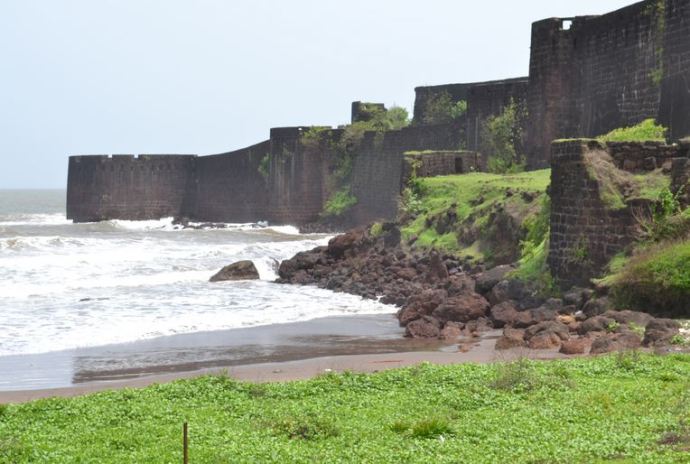
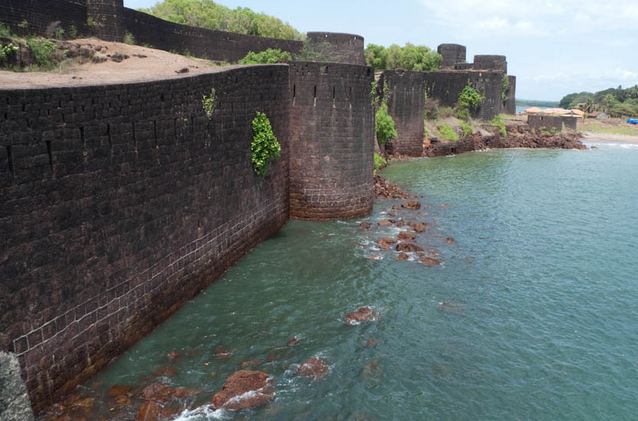
Located in Devgad taluka, Vijaydurg Fort remains one of the oldest historic forts in the history of Maharashtra. The fort is also known as Eastern Gibraltar and remains impregnable because of its location on the Sindhudurg coast.
Vijaydurg Fort Maharashtra
Constructed during the regime of Raja Bhoja II it was in the year 1205 that this fort was completed. Many historic documents reveal that Shivaji Maharaj personally hoisted the saffron flag here. It was in the year 1653 that Shivaji captured this fort from Adil Shah of Bijapur and extended the fort area by constructing three new walls on the eastern side each wall 36 meters high. Locally this fort is also known as Gheria.
Vijaydurg Fort in Maharashtra
While there are no top hotels close to this fort you can look out for some affordable guest house nearby. The fort is 52 kilometers from Kasarde which is on Mumbai-Goa highway. The fort is around 180 kilometers from Panaji and 525 kilometers from Mumbai.
Pratapgad Fort
Pratapgad also known as Pratapgarh or Pratapgadh stands tall in the Satara district signifying the Battle ofPratapgad. The fort is not too far away from top tourist destination Mahabaleshwar.
Pratapgadh Fort Afzal Tower
The fort was built to protect and defend the Par pass and completed in 1656. The fort also stands for the epic battle between Shivaji Maharaj and Afzal Khan in 1659 testing the valor and strength of Maratha empire.
Pratapgadh Fort Maharashtra
The fort name literally means Valor fort. It is said that after killing Afzal Khan, Shivaji Maharaj buried his head under the tower in the fort. With just 25 kilometers from Mahabaleshwar visiting the fort is easy on weekends. You can take a bus from Panvel to Poladpur and enjoy the monsoon and the landscape around the fort.
Raigad Fort
Raigad Fort plays an important role in the development of Maratha Empire as Shivaji made Raigad Fort the capital of his kingdom in 1674 when he was crowned Maratha King. Located near Mahad in the Raigad district the fort was originally built by Chandrarao More in 1030.
Raigad Fort Maharashtra
Raigad Fort in Maharashtra
Today, Raigad Fort is a great travel destination for those who want to take a peek into the history and also for nature and adventure lovers. Raigad Fort is around 187 kilometers from Mumbai and you can take any local state transport bus or taxis that can help you get here. You can also make use of the ropeway that can help you visit this grand fort.
Rajgad Fort
Rajgad Fort Maharashtra
Rajgad Fort literally means the Royal Fort and located in the Pune district  and 1318 meters above the sea level this fort remained the capital of the Maratha Empire for 26 years before Raigad was announced the capital of the Maratha Kingdom. Rajgad Fort is the only fort where Shivaji Maharaj stayed for more number of days than any other fort. The fort stands witness to many historic and personal events in the life of Shivaji Maharaj including the death of Shivaji’s Queen Saibai. When you visit the fort you can view her tomb in the fort. This fort is a great tourist destination for trekkers and climbers.
Purandar Fort

Purandar Fort Entrance Door
This fort has witness the rise of the Maratha Kingdom against the Bijapur Kingdom and the Mughals and has plays vital role in many treaties as well. Purandar Fort or Purandhar Fort stands 1387 meters above the sea level just 40 kilometers south-east of Pune.
Purandar Fort Maharashtra
There are actually two forts here, main one called Purandar and the second smaller fort called Vajragad or Rudramal. During the epic battle here, Mughals managed to secure and win the fort killing Murar Baji Prabhu, brave commander of the Purandar Fort. Shivaji had to surrender to 23 forts to Aurangzeb signing the Treat of Purandar in 1665, but the truce did not last long. Shivaji Maharaj revolted against Aurangzeb in 1670 recapturing this historic fort. Shivaji’s eldest son Sambhaji was born at the Purandar Fort. When you are at the fort you can view the statue of Murar Baji Prabhi Deshpande, the fort commander who laid his life while fighting against the Mughals. Trekkers and paragliders and even travelers can reach Pune and take the Saswad road and then towards Narayanpur that will take you to the Purandar Fort.

The perfect mixture to start your day

The perfect mixture to start your day


Most of us drink the warm water mixed with honey and lemon juice every morning to help reduce weight. Here's what all this magical mix does for your body and why you should drink it, if you're not already!


Helps cleanse the liver - Liver is the main organ which helps in purification of the body. This mix, helps keep the liver pure and toxin free. The liver is mainly responsible for producing protein and maintaining digestion process, so it is essential that the liver is kept pure and functioning well also.

Helps weight loss - This mix helps cleanse the liver which in turn removes the toxins from the body. Since the body is now free of toxins, metabolism gets boosted and the body starts functioning much better.


Vitamins and minerals - Consuming this mix every morning kick starts your system by providing it with a boost of essential vitamins and minerals first thing in the morning. The drink is a heady mix of vitamin C, vitamin B, magnesium, calcium and phosphorous.


So serve your body a cocktail of nutrients and energy early morning by drinking this popular mixture! Be healthy !